Advertising, sales, logistics, then design. Every stop taught me to listen for how people actually work, and to find the rhythm that makes complex products feel simple.
My story
Curiosity came first
As a kid, I loved to draw, and I was fascinated by commercials: how visuals, words, and music could come together to tell a story in just 30 seconds. I’d also catch myself thinking about what I would have done differently. Maybe a different line would have landed better, or a different ending would have made the message stick.
For a while, I thought I’d end up making commercials someday. After high school, that interest led me to study sound design first, and then public relations, advertising, and graphic design in college.
Learning to listen
After college, my career took a different direction. I spent several years in sales across hospitality, home remodeling, and logistics.
Sales taught me how to listen, ask the right questions, and figure out what people really need, which isn’t always what they first ask for. It also taught me to balance those needs with business goals. Looking back, those are skills I rely on every day as a designer.
Discovering UX
As a logistics broker, I depended on software every day to manage shipments, carriers, and pricing. And honestly, much of it was frustrating to use. Simple tasks took too many steps. Important information was hard to find. Workflows that should have been simple were anything but.
“Why would someone design it this way?”
It was the same question I used to ask about those commercials as a kid. Only now I was seeing firsthand how poor design affected people just trying to do their jobs.
I wanted to understand why the software worked the way it did, and how it could be better. That curiosity, along with years of working directly with customers, is what led me into UX and product design.
Connecting the pieces
Music has always been a big part of my life. I started on piano when I was younger and eventually found my way behind a drum kit.
Drumming taught me that a great groove isn’t about any single drum or cymbal. It’s the relationship between the kick, the snare, the hi-hat, the timing, and even the space between notes. Each part has a purpose, but it’s how they work together that makes everything feel right.
I approach complex software the same way. A screen or interaction can work perfectly on its own and the overall experience can still fall apart. You have to understand how the pieces connect, how people move between them, and how everything fits into the larger system.
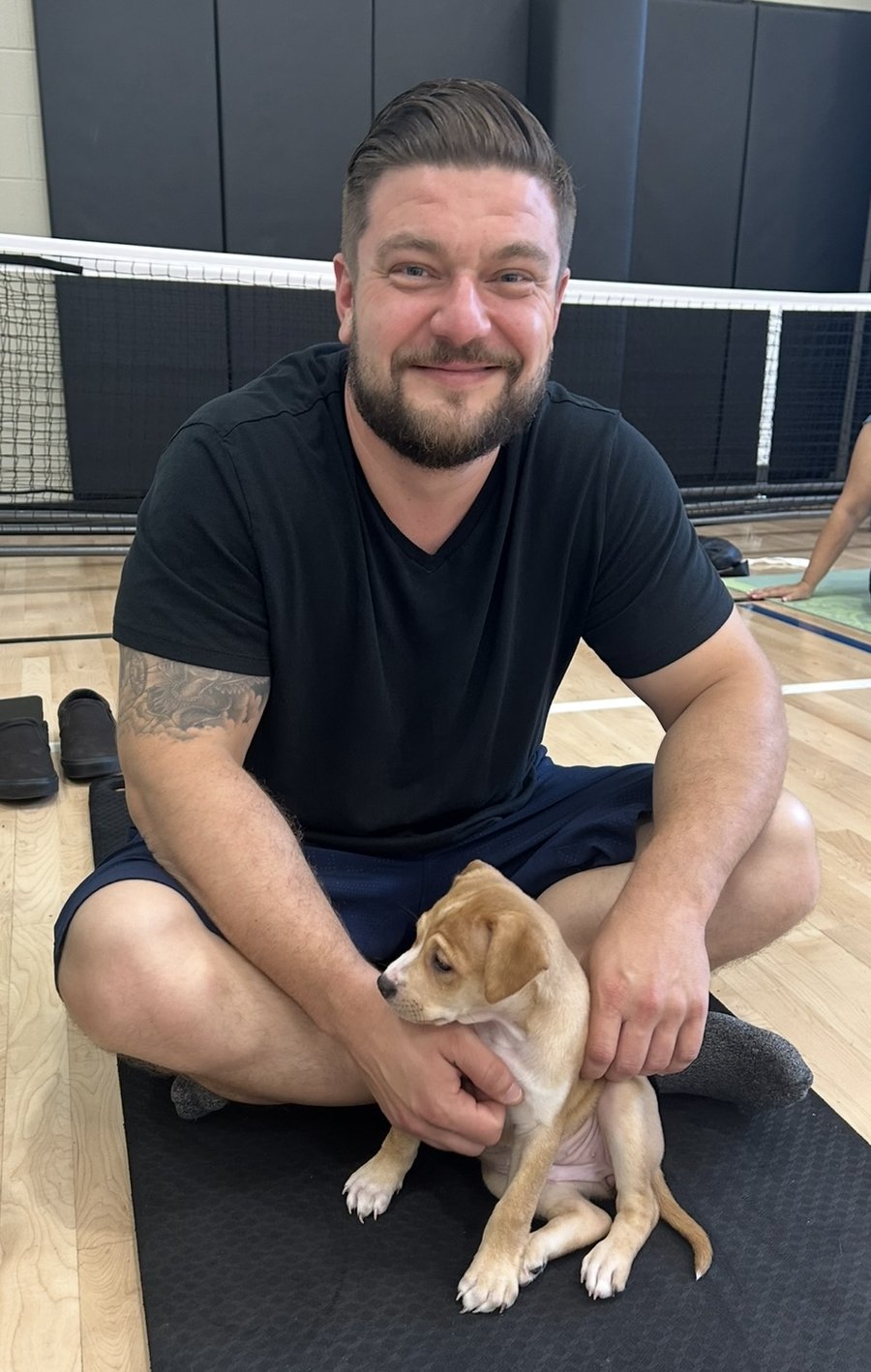
That’s what I enjoy most about design: taking something complicated, understanding how it all works together, and making it simpler for the people who depend on it. When I’m not untangling enterprise workflows, you can usually find me behind a drum kit, spending time with my wife and friends, or trying to keep up with my puppy, Twinkle.
My focus
The problems I like solving.
Complex workflowsMaking data-heavy, rule-driven systems easier to understand, navigate, and use.
High-stakes experiencesDesigning for healthcare, financial services, and logistics, where clarity, accuracy, and trust matter.
Practical AI applicationsTurning emerging AI capabilities into useful, understandable experiences that support real work.
Continuous learning
Certifications
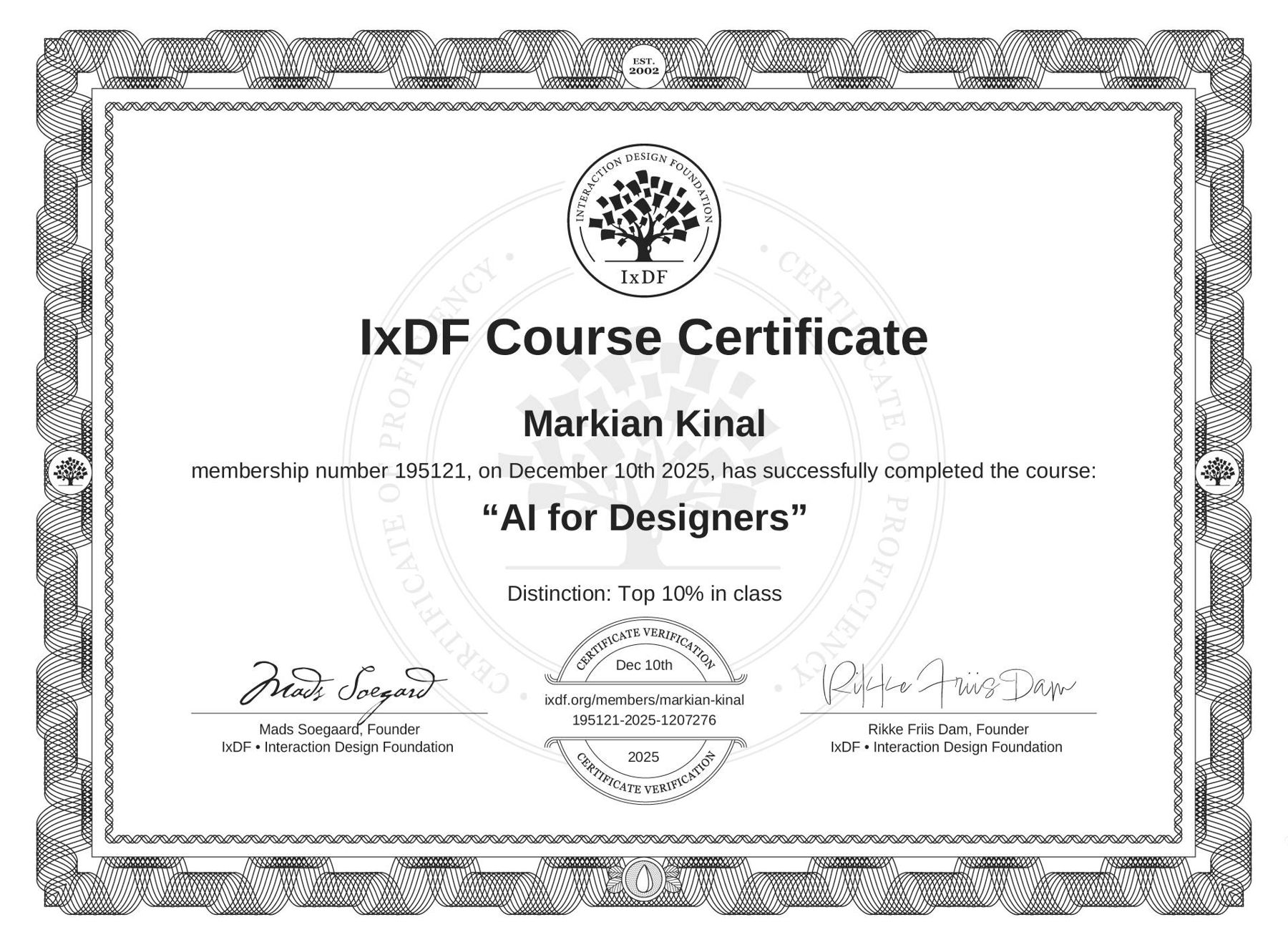
AI for DesignersInteraction Design Foundation · Top 10% distinction · 2025
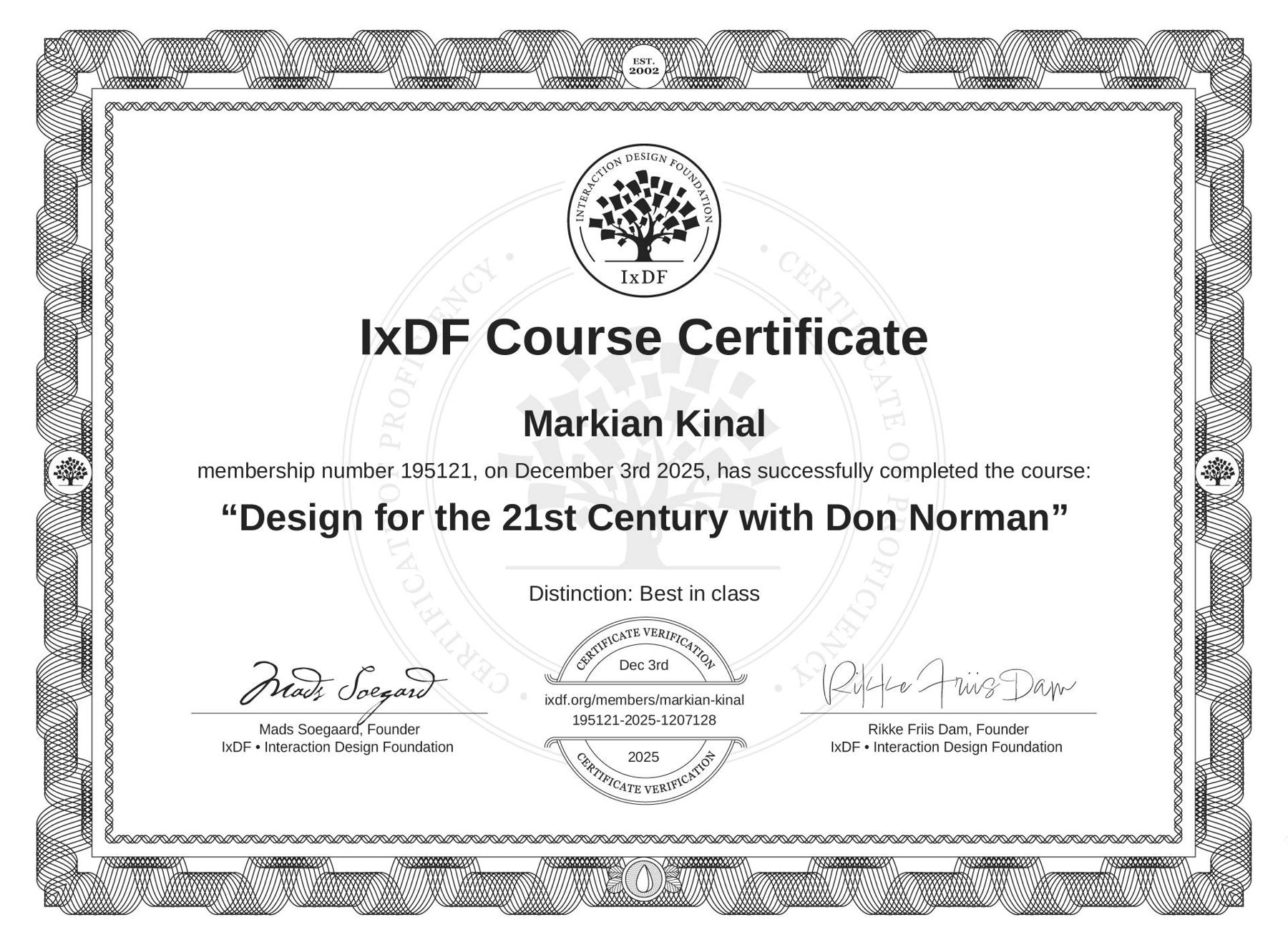
Design for the 21st Century with Don NormanInteraction Design Foundation · Best in class · 2025